Recent news, publications, and lab activities from the MINNE group.
-
Feb 1, 2026
Combining shallow and deep neural networks on pseudo-colour enhanced images for digital breast tomosynthesis lesion classification
The classification of lesion types in Digital Breast Tomosynthesis (DBT) images is crucial for the early diagnosis of breast cancer. However, the task remains challenging due to the complexity of breast tissue and the subtle nature of lesions. We propose a novel DBT Dual-Net architecture comprising two complementary neural network branches that extract both low-level and high-level features, combined with pseudo-colour enhancement and inter-slice majority voting.
-
Jan 15, 2026
Morphology-enhanced CAM-guided SAM for weakly supervised breast lesion segmentation
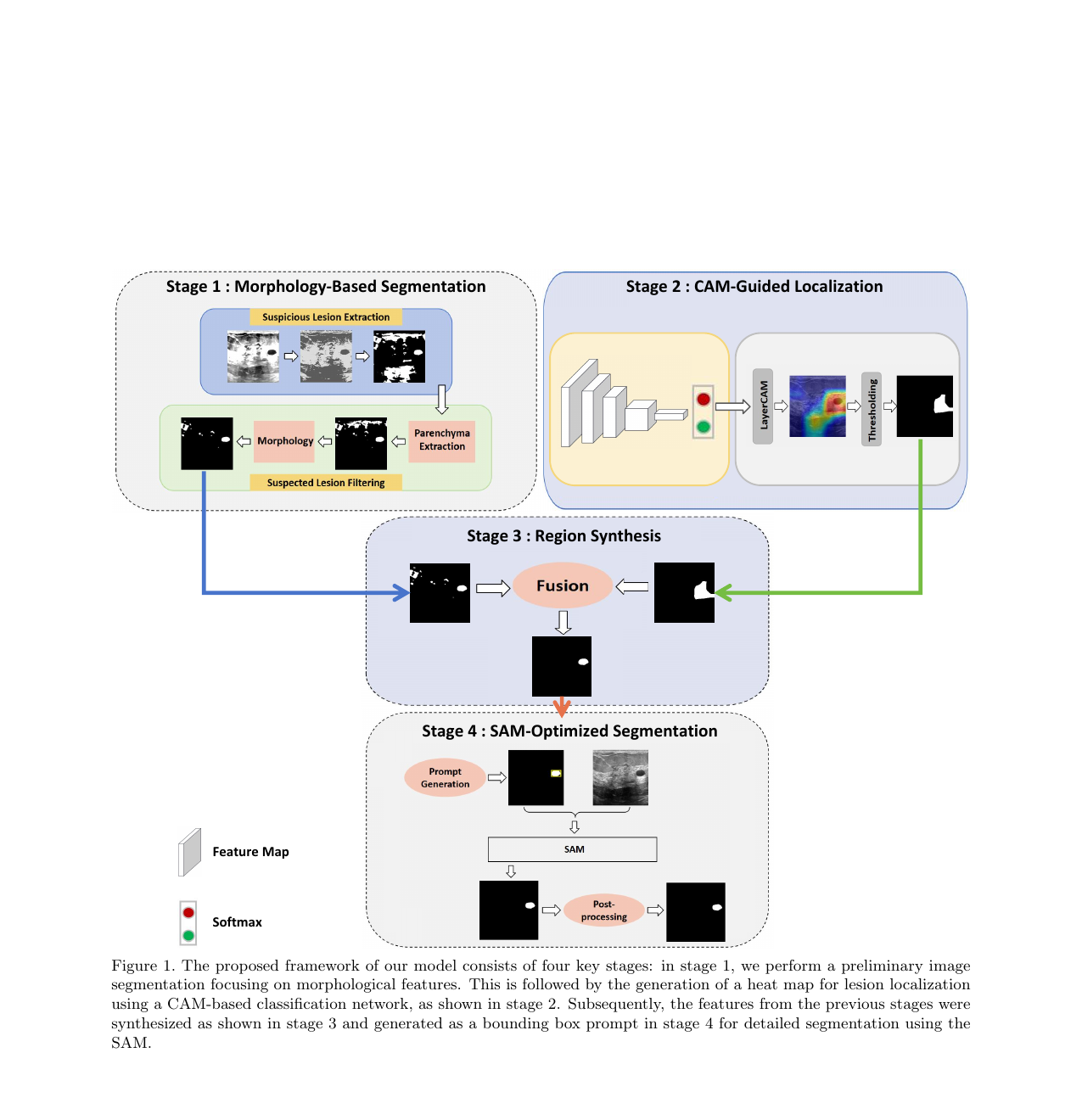
Ultrasound imaging plays a critical role in the early detection of breast cancer. We present a novel framework for weakly supervised lesion segmentation in early breast ultrasound images using morphological enhancement and class-activation-map (CAM)-guided localisation, followed by the Segment Anything Model (SAM) for detailed segmentation. The approach does not require pixel-level annotation, reducing data-annotation cost.
-
Dec 1, 2025
MAIA: a collaborative medical AI platform for integrated healthcare innovation
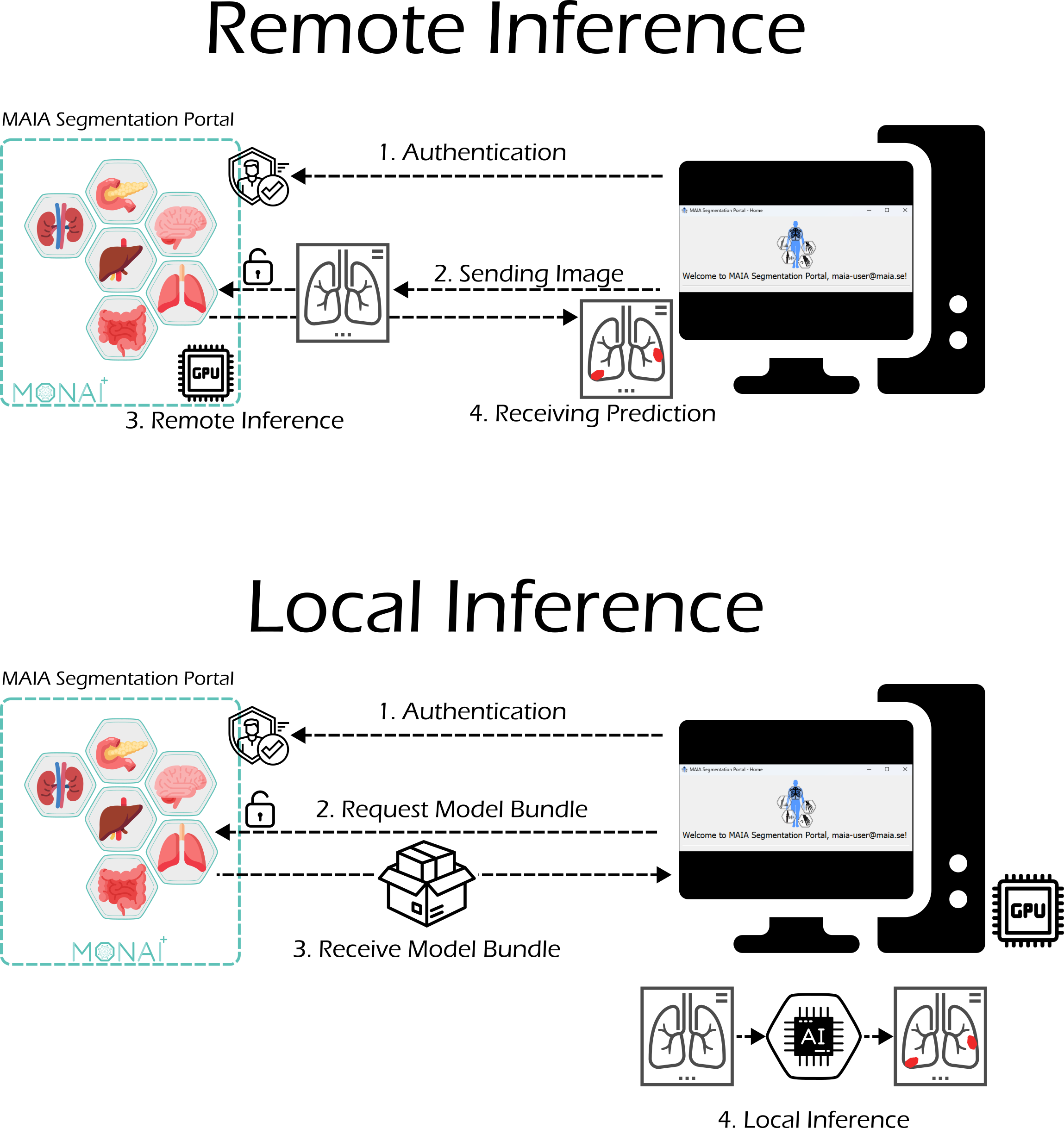
The integration of Artificial Intelligence into clinical workflows requires robust collaborative platforms that bridge the gap between technical innovation and practical healthcare applications. We introduce MAIA (Medical Artificial Intelligence Assistant), an open-source platform designed to facilitate interdisciplinary collaboration among clinicians, researchers, and AI developers. Built on Kubernetes, MAIA offers a modular, scalable environment with integrated tools for data management, model development, annotation, deployment, and clinical feedback.
-
Oct 16, 2025
First International Society of Tractography conference
We participated in the first conference organized by the International Society of Tractography
-
Oct 15, 2025
MONet-FL: Extending nnU-Net with MONAI for clinical federated learning
While nnU-Net's success as a state-of-the-art tool for medical image segmentation has driven its adoption as a baseline, its limited portability and lack of clinical integration have limited broader deployment in real-world healthcare workflows. The MONet Bundle addresses these challenges by extending nnU-Net within the MONAI ecosystem, providing a modular benchmarking tool for federated learning that is directly compatible with downstream clinical operations such as model deployment, active learning, and DICOM-based PACS integration.
-
Oct 11, 2025
MINNELab at MICCAI 2025 — Reconnecting with the Community in Daejeon 🇰🇷
Minnelab members had an inspiring experience at MICCAI 2025 in Daejeon, reconnecting with the vibrant community, presenting their work on federated learning and the MONet Bundle, and enjoying the warmth and culture of Korea.
-
Oct 10, 2025
BraTS-FL: Enhancing generalisation in brain-tumour segmentation via federated learning
A federated-learning approach to brain-tumour segmentation aimed at generalisation across heterogeneous cohorts — adult glioma, brain metastasis, meningioma, paediatric glioma, and a sub-Saharan African cohort. The method took first prize in the BraTS GoaT Task 7 subchallenge on generalisability across tumour types, confirming that federated training on site-specific nnU-Net models can close the domain gap between tumour subtypes and acquisition sources.
-
Oct 5, 2025
Tractography on implicit neural representations of diffusion MRI
Diffusion-weighted imaging is often constrained by scan time, producing sparsely and non-uniformly sampled Q-space that hinders accurate signal modelling and affects downstream tractography. We represent the raw DWI signal with implicit neural representations (INRs) to address these limitations, and assess the effect of INR-based reconstructions on streamline tractography as a practical use case.
-
Oct 4, 2025
Study trip to LA organized by WASP
Our group was represented at a study trip in LA visiting universities including: Caltech, UCLA, UC Irvine and companies as Jet Propulsion Lab at NASA, Amazon Web Services and Google.
-
Sep 20, 2025
Randomly COMMITting: iterative convex optimisation for microstructure-informed tractography
Tractography is extensively utilised in brain-connectivity studies using diffusion MRI, but anatomically implausible and redundant streamlines are a significant challenge. We introduce rCOMMIT, a tractogram filtering method that extends COMMIT by assessing each streamline in multiple randomised tractogram compositions to estimate an acceptance rate per streamline; this rate is used as a pseudo-label to train neural-network classifiers in a semi-supervised manner, reducing computational cost.
-
Sep 17, 2025
MAIA at AIDA TechDays Workshop
MINNELab presented MAIA at the AIDA TechDays Workshop on 17 September 2025, showcasing its end-to-end AI workflows, active learning, and federated learning capabilities to the Swedish medical AI community.
-
Jul 1, 2025
Synthesising individualised aging brains in health and disease with generative models and parallel transport
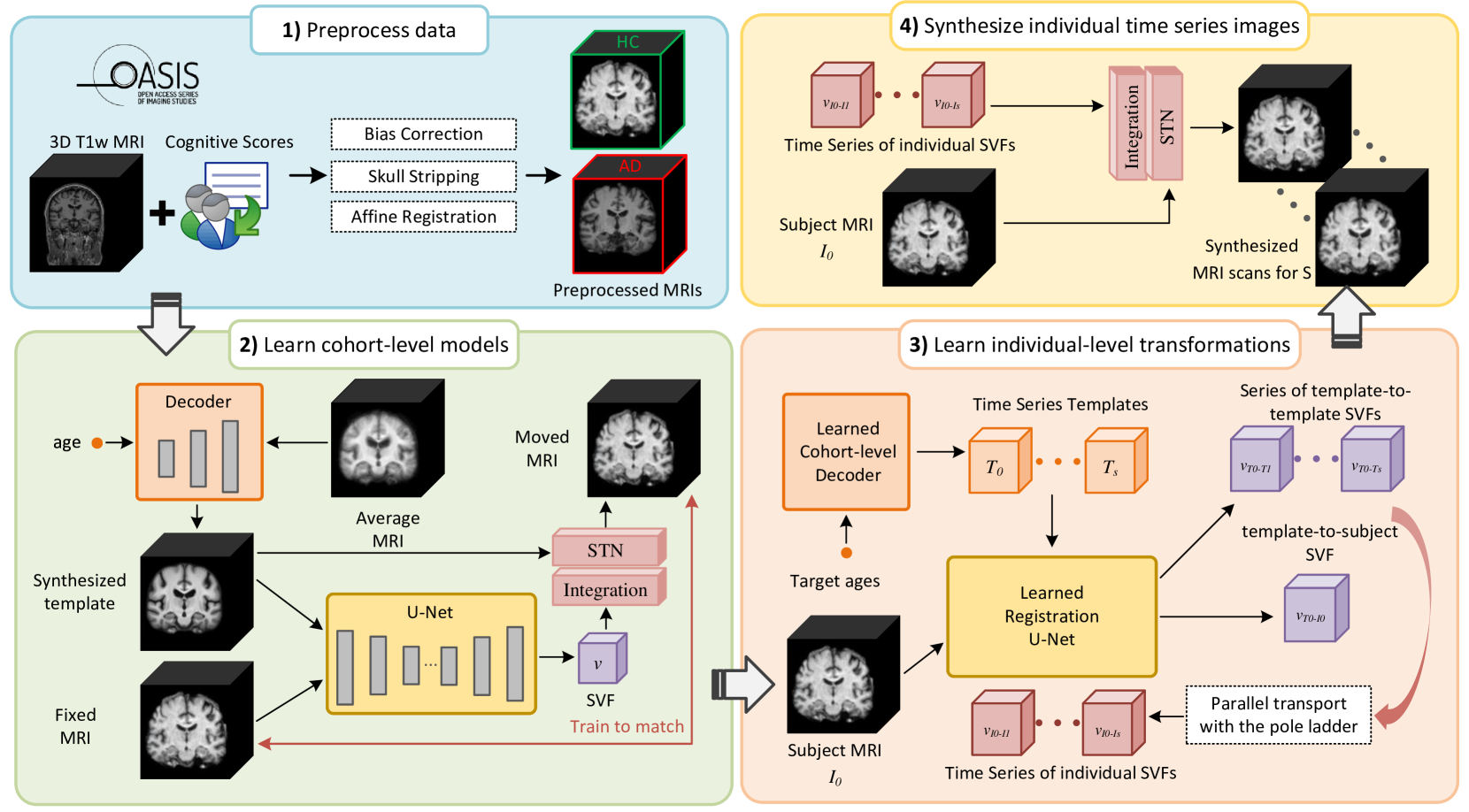
Simulating prospective MRI scans from a given individual brain image is challenging: it requires accounting for canonical changes in aging and/or disease progression while also considering the individual brain's current status. We introduce InBrainSyn, a framework that uses parallel transport to adapt population-level aging trajectories learned by a generative deep template network to individual subjects, producing high-resolution longitudinal MRI that is topologically consistent with the original anatomy by design.
-
Jun 1, 2025
Effects of Parkinson's disease on mechanical and microstructural properties of the brain
Uses magnetic resonance elastography together with multidimensional diffusion MRI to jointly quantify mechanical and microstructural changes of the brain in Parkinson's disease. Finds significant softening in the temporal and occipital lobes, co-occurring with increased mean diffusivity, while other microstructural properties are largely unchanged; the mesencephalon shows signs of neuronal atrophy but does not soften — suggesting that age effects can explain most atrophy whereas PD-related softening involves additional mechanisms.
-
Apr 15, 2025
Learning accurate rigid registration for longitudinal brain MRI from synthetic data
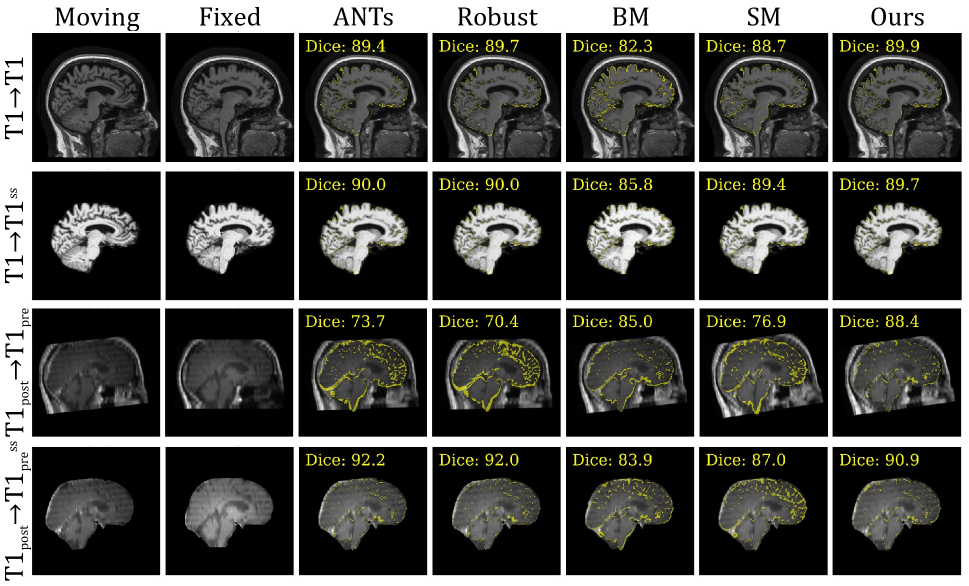
Recent machine-learning methods for linear and deformable registration have become state of the art across subjects, but they have demonstrated limitations when applied to longitudinal (within-subject) registration, where achieving precise alignment is critical. We propose a model optimised for longitudinal rigid brain registration, trained on synthetic within-subject pairs augmented with rigid and subtle non-linear transforms, that outperforms prior cross-subject networks on real follow-up scans within and across MRI contrasts.
-
Apr 7, 2025
Decomposing the effect of normal aging and Alzheimer’s disease in brain morphological changes via learned aging templates
Alzheimer’s disease (AD) subjects usually show more profound morphological changes with time compared to cognitively normal (CN) individuals. These changes are the combination of two major biological processes: normal aging and AD pathology. Investigating normal aging and residual morphological changes separately can increase our understanding of the disease. This paper proposes two scores, the aging score (AS) and the AD-specific score (ADS), whose purpose is to measure these two components of brain atrophy independently. For this, in the first step, we estimate the atrophy due to the normal aging of CN subjects by computing the expected deformation required to match imaging templates generated at different ages. We used a state-of-the-art generative deep learning model for generating such imaging templates. In the second step, we apply deep learning-based diffeomorphic registration to align the given image of a subject with a reference imaging template. Parametrization of this deformation field is then decomposed voxel-wise into their parallel and perpendicular components with respect to the parametrization of the expected atrophy of CN individuals in one year computed in the first step. AS and ADS are the normalized scores of these two components, respectively. We evaluated these two scores on the OASIS-3 dataset with 1,014 T1-weighted MRI scans. Of these, 326 scans were from CN subjects, and 688 scans were from subjects diagnosed with AD at various stages of clinical severity, as defined by clinical dementia rating (CDR) scores. Our results reveal that AD is marked by both disease-specific brain changes and an accelerated aging process. Such changes affect brain regions differently. Moreover, the proposed scores were sensitive to detect changes in the early stages of the disease, which is promising for its potential future use in clinical studies. Our code is freely available at https://github.com/Fjr9516/DBM_with_DL.
-
Oct 10, 2024
MICCAI Conference 2024
Our lab is attending the MICCAI conference to present our latest research in biomedical imaging.
-
Oct 1, 2024
Unsupervised domain adaptation for pediatric brain-tumour segmentation
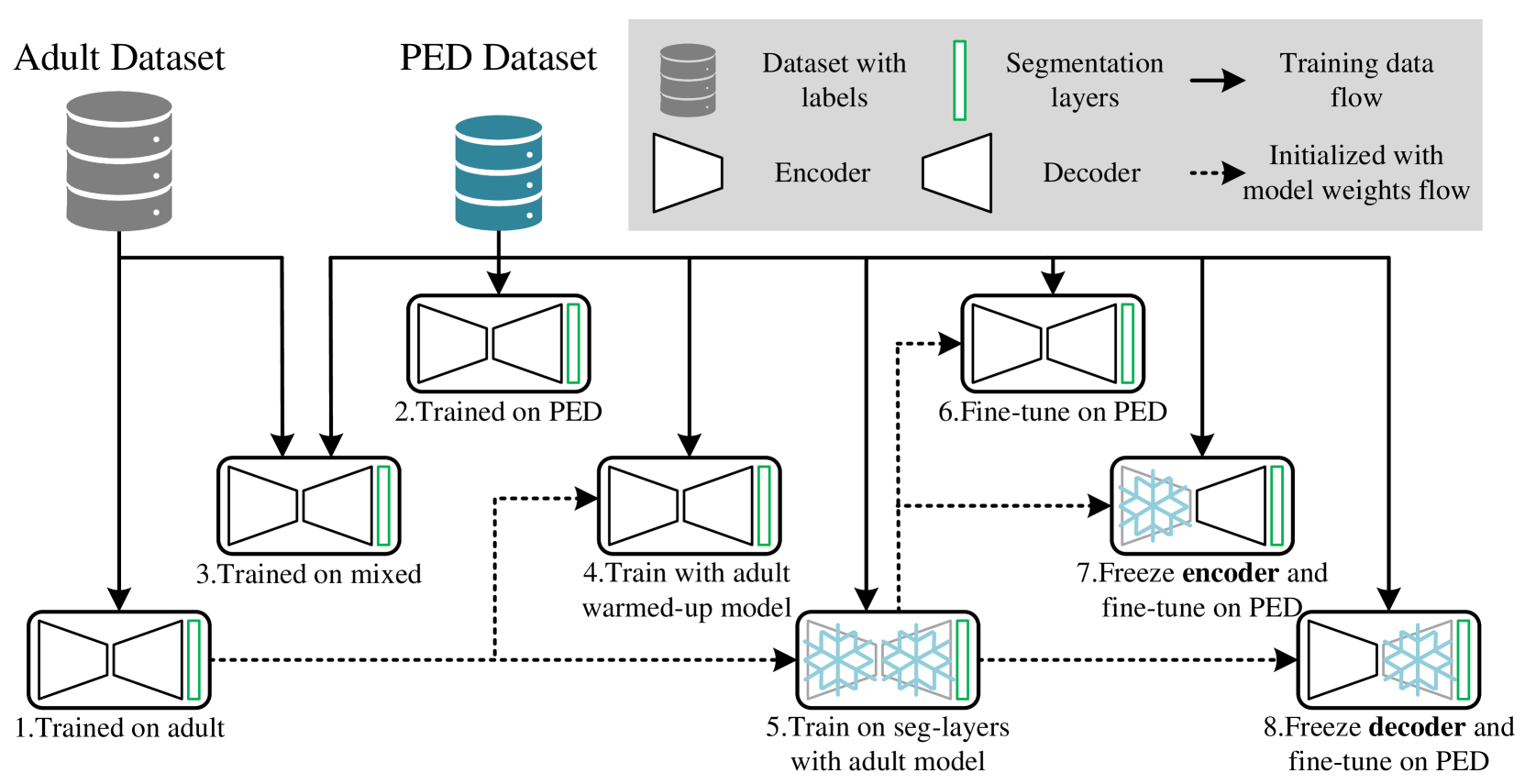
Significant advances have been made in automatic segmentation of adult gliomas, but performance degrades on paediatric glioma due to imaging and clinical differences. Manual annotations in children are scarce. We propose DA-nnUNet, which performs unsupervised domain adaptation from adult glioma (source) to paediatric glioma (target) by adding a domain classifier with a gradient-reversal layer to nnU-Net — achieving ~32% better Dice and ~20-point lower 95th-percentile Hausdorff in the tumour-core region without using any paediatric annotations.
-
Jul 23, 2024
Bounding tractogram redundancy
Proposes a principled definition of redundancy in diffusion MRI tractograms and an algorithm to remove superfluous streamlines while preserving anatomical coverage and connectivity. Demonstrates on public datasets that large fractions of streamlines can be pruned without degrading downstream analyses, improving storage and computation.
-
May 15, 2024
3D breast ultrasound image classification using 2.5D deep learning
3D breast ultrasound is a radiation-free and effective imaging technology for breast-tumour diagnosis, but it is time-consuming to check compared to mammograms. We propose a 2.5D deep-learning–based classification system: a pre-trained STU-Net is fine-tuned to segment the tumour in 3D, after which DenseNet-121 is fine-tuned on the 10 slices with the largest tumoral area plus their neighbours. Evaluated on the TDSC-ABUS MICCAI Challenge 2023 dataset, the method outperforms 3D CNNs and radiomics baselines.
-
Feb 20, 2024
Lesion localisation in digital breast tomosynthesis with deformable transformers using 2.5D information
Adapts a transformer-based detection method to localise lesions in digital breast tomosynthesis (DBT), removing the need for non-maximum-suppression post-processing. Deformable-convolution detection transformers better capture small lesions, and transfer learning is used to cope with the scarcity of annotated DBT data. Experimental results show the method performs better than all comparison baselines.
-
Jun 15, 2023
Fast 3D image generation for healthy brain aging using diffeomorphic registration
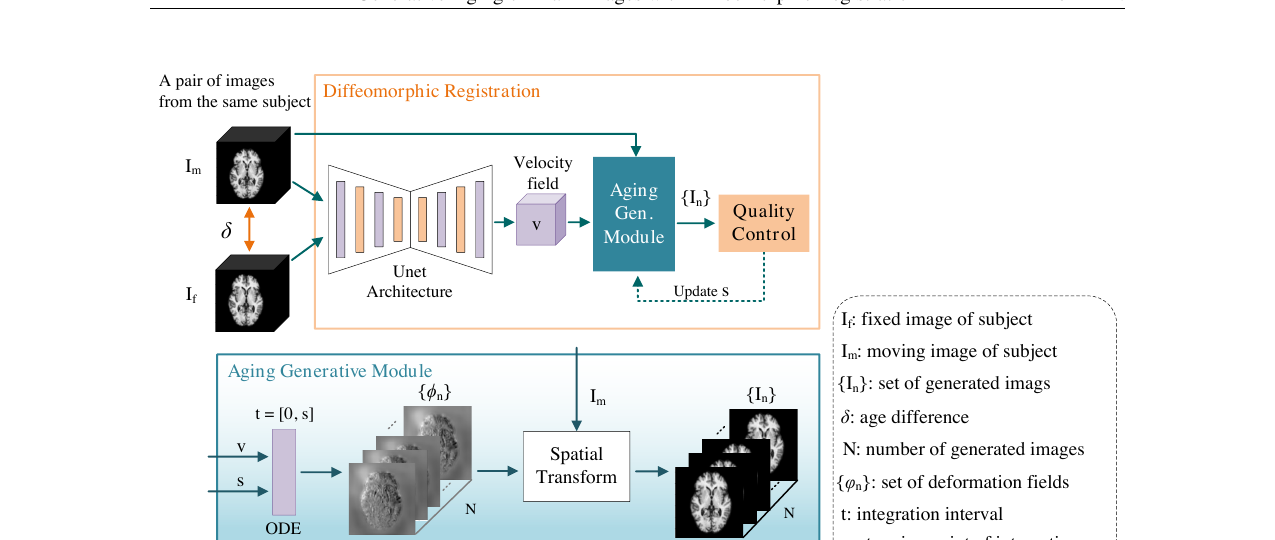
Proposes a methodology for generating 3D MRI scans of healthy brain aging from two scans acquired at different time points — filling missing data in longitudinal cohorts with anatomically plausible images that capture subject-specific aging. Introduces two modules within Synthmorph, a fast deep-learning diffeomorphic registration method, to simulate aging between first and last available scans. 7,548 images were generated (one per subject per 6 months), and quality was evaluated quantitatively and by an experienced neuroradiologist.
-
Feb 15, 2023
Synthesis of pediatric brain-tumour images with mass effect
The amount of labelled data in children is much lower than that for adult subjects. This paper proposes a new method to synthesise high-quality pathological paediatric MRI brain images from pathological adult ones. The whole process is divided into three steps: (A) predicting the mass effect induced by a tumour, (B) applying the predicted mass effect to healthy images, and (C) synthesising plausible tumour MRI scans from deformed masks. The method can automatically simulate the mass effect given the location and shape of the pathology.
-
Aug 15, 2022
Spherical convolutional neural networks for survival-rate prediction in cancer patients
Survival-rate prediction (SRP) is a valuable tool for clinical diagnosis and treatment planning in lung cancer. We propose a fully automated method for SRP from CT images that combines automatic tumour segmentation with a deep-learning approach for extracting rotation-invariant features. A variational autoencoder provides information to a U-Net segmentation model, and the 3D volumetric image of the tumour is projected onto 2D spherical maps for input to a spherical convolutional neural network.
-
May 15, 2022
Predicting the trabecular bone apparent stiffness tensor with spherical convolutional neural networks
The apparent stiffness tensor characterises trabecular-bone quality. We train spherical convolutional neural networks (SphCNNs) to estimate this tensor from micro-CT data. Information on the edges, trabecular thickness, and spacing is summarised as functions on the unit sphere used as inputs, and the resulting dimensionality reduction allows training on relatively small datasets. Predictions are compared against micro–finite-element (μFE) reference stiffness and fourth-order fabric-tensor models; combining edges and trabecular thickness yields significant accuracy improvements over the fabric-tensor baseline.